Maintaining muscle mass and function becomes a central health priority for men as they move past age 50. This page explains the science and practical application of resistance vs cardio for preserving muscle, with clear recommendations you can apply this week. Mature Male Fitness Coach combines up-to-date evidence with coaching experience to help you prioritize training stimuli that protect strength, metabolic health, and daily function without sacrificing cardiovascular fitness. If you want a tailored plan, call 14707441483 to schedule a consultation.
Muscle mass is not just about looks; it underpins mobility, metabolic rate, bone health, glucose regulation, and resilience to injury. After 50 men commonly experience age-related muscle loss, or sarcopenia, driven by reduced anabolic signaling, lower activity, and hormonal changes. Preserving lean mass supports independence and reduces the risk of falls, hospitalizations, and chronic disease. Understanding how different forms of exercise affect these processes helps you invest time in the activities that deliver the biggest long-term return.
Resistance training provides a potent stimulus to slow or reverse the loss of muscle that typically accelerates in later decades. Yet cardiovascular exercise remains essential for heart health and endurance. The key is how you combine them: prioritize strength-building stimuli while using cardio strategically to improve conditioning without undermining muscle preservation. This balanced approach allows you to keep strength and fitness concurrently rather than choosing one at the expense of the other.
 Research consistently shows that progressive resistance training is the most effective intervention to preserve and increase muscle mass and strength in older adults. Studies demonstrate increases in muscle cross-sectional area, fiber size, and neuromuscular function with consistent strength training, even into the 70s and beyond. In contrast, traditional steady-state cardio provides limited hypertrophic stimulus and can, when done in excess, interfere with strength gains if recovery and nutrition are inadequate.
That said, cardio delivers cardiovascular benefits, lowers resting heart rate and blood pressure, and improves endurance needed for daily tasks. The most compelling evidence for combining modalities favors a carefully periodized plan where resistance work is prioritized and cardio is integrated to support aerobic capacity without creating chronic fatigue or caloric deficits that impede muscle growth or maintenance.
| Modality | Primary benefit | Impact on muscle |
|---|---|---|
| Resistance training | Strength, hypertrophy, function | Strong positive effect on muscle mass and strength |
| Cardiovascular training | Cardiorespiratory fitness | Modest to neutral; can be negative if excessive without recovery |
Prioritization means designing a weekly plan where resistance sessions are scheduled during times when you are freshest and can lift with proper intensity. For most men over 50, that means 3 sessions per week focused on compound movements-squats, deadlifts, presses, rows-and accessory work to address weaknesses. These sessions should emphasize progressive overload: gradually increasing load, volume, or quality of reps across weeks to drive adaptation.
Cardio should supplement rather than dominate. Reserve moderate-intensity steady-state (MISS) or low-intensity steady-state (LISS) cardio for active recovery days or shorter conditioning sessions of 20-40 minutes. High-intensity interval training (HIIT) can be effective for time-efficient conditioning, but it should be used sparingly and scheduled away from heavy strength days to prevent interference with strength adaptations and recovery. Proper sequencing-strength before intense cardio in the same session or on separate days-helps protect strength progress.
Below are two sample weekly templates you can adapt to fitness level and schedule. Both place resistance as the priority while maintaining consistent cardio to support heart health and energy systems.
Day 1: Lower body strength (heavy compounds, 3-5 sets of 4-8 reps), followed by 10-15 minutes of low-intensity bike or walk for cooldown. Day 2: Cardio (30 minutes LISS) and mobility. Day 3: Upper body strength (3-5 sets of 5-8 reps compounds, accessory work). Day 4: Active recovery or light cardio. Day 5: Full body or posterior chain emphasis (moderate reps, 3-4 sets of 6-12), finish with a short HIIT session only if recovered. Days 6-7: Rest and light mobility or recreational activity.
Day 1: Strength (full-body, moderate intensity, 3 sets of 6-10 reps). Day 2: HIIT (15-20 minutes) or interval hill sprints, scheduled in the morning; strength later in the day only if recovered. Day 3: Mobility and LISS (30-40 minutes). Day 4: Strength (focus on weaker movement patterns). Day 5: Long LISS or sport/recreation. Day 6: Light strength or circuit training with emphasis on preserving intensity for key lifts. Day 7: Rest. Emphasize nutrition and sleep on harder weeks.
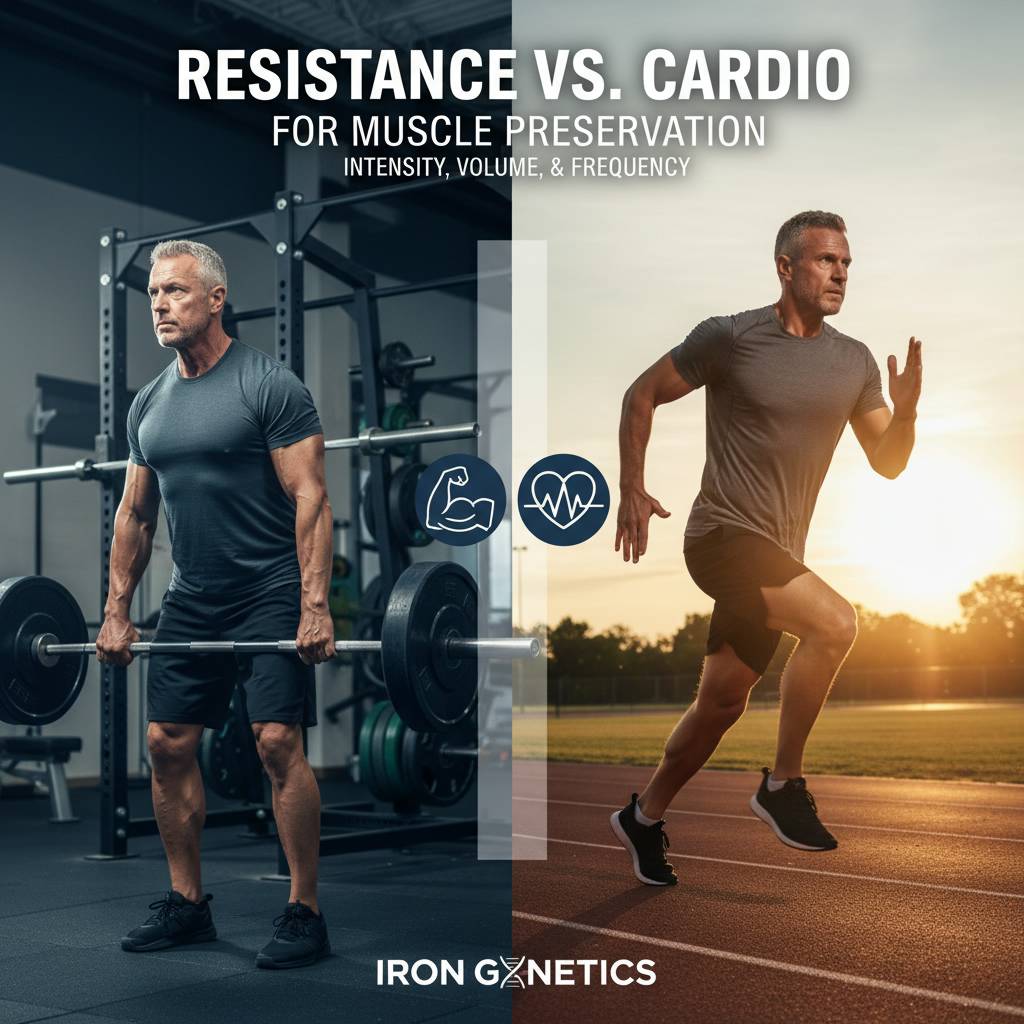 To preserve muscle you must control three primary training variables. Intensity relates to how heavy the loads are relative to your maximum-lifting in the 70-85% 1RM range is productive for maintaining and building muscle. Volume is total work (sets x reps x weight) and should not be chronically low; aim for 8-20 hard sets per muscle group per week distributed across sessions. Frequency refers to how often you train a muscle; 2-3 times per week per muscle group often produces better results for older trainees because it offers more frequent anabolic signaling.
Progressive overload can take many forms beyond adding weight: improving tempo, reducing rest between sets for metabolic stress, adding a set, or increasing range of motion. As you age, quality of movement, joint-friendly variations, and scheduled deloads every 4-8 weeks become increasingly important to maintain output without injury. You can remain strong, even improving performance, by prioritizing these variables in a manageable, consistent plan.
Exercise is the stimulus; nutrition and recovery determine whether adaptation occurs. Protein intake is critical-most men over 50 benefit from 1.2-1.8 grams per kilogram of body weight per day, timed to distribute protein across meals to maximize muscle protein synthesis. Adequate calories prevent catabolism; if weight loss is a goal, aim for modest deficits while prioritizing protein and resistance training to protect lean mass.
Recovery strategies matter as much as training selection. Prioritize 7-9 hours of sleep nightly when possible, manage stress, and plan recovery days. Simple interventions like foam rolling, targeted mobility work, and short low-intensity walks can enhance circulation and recovery without compromising strength training. Supplements such as creatine monohydrate have strong evidence for safety and effectiveness in supporting muscle and strength in older adults; talk with a healthcare provider before starting any supplement regimen.
Many men over 50 make predictable errors: doing too much cardio at the expense of strength, using low loads or machines exclusively, neglecting progressive overload, and under-eating protein. Another common issue is poor exercise selection or technique resulting in joint pain that forces long breaks. The antidote is a measured plan prioritizing compound lifts, progressive overload, and sensible cardio that supports rather than undermines strength work.
Case 1: Mark, 54, previously ran 30-40 miles per week and noticed shrinking arms and declining squat numbers. By reducing weekly mileage to 10-15 miles, introducing three structured resistance sessions emphasizing progressive overload, and increasing protein intake to 1.5 g/kg, Mark regained 6-8 pounds of lean mass and improved squat strength within 16 weeks while retaining adequate aerobic capacity for daily life.
Case 2: Luis, 62, had limited gym time and wanted cardiovascular health plus strength. A twice-weekly full-body strength routine, one HIIT session, and two LISS sessions replaced long, daily walks with inefficient stimulus. The result was better blood pressure control, improved gait speed, and preserved lean mass, which translated directly to greater confidence in everyday activities.
Not necessarily. Moderate cardio does not inherently cause muscle loss if you maintain resistance training volume, eat sufficient protein and calories, and allow for recovery. The risk increases with excessive cardio combined with inadequate nutrition or skipped strength sessions.
For most men over 50, 3 quality resistance sessions per week, emphasizing progressive overload and 8-20 total sets per muscle group per week, will produce maintenance or growth over time. Beginners can start with fewer sets per week and increase gradually.
Yes, but sequencing matters. If both are performed in the same day, do strength first and perform HIIT later only if you can recover sufficiently. Alternatively, separate them by 6-12 hours or schedule HIIT away from heavy lifting days to minimize interference.
Every man's response to training differs based on history, injury profile, time availability, and goals. Mature Male Fitness Coach offers personalized program design and coaching to help you prioritize resistance training while integrating conditioning in a way that protects muscle and enhances function. Whether you need a beginner roadmap or an evidence-based progression plan, a tailored approach saves time and produces better long-term results.
Initial consultations typically include movement screening, training history review, and a customized plan with progressions you can implement immediately. Typical pricing for individualized programming and coaching ranges from $75-$200 depending on package and frequency. For a straightforward next step, contact Mature Male Fitness Coach to arrange a brief consultation and move confidently toward stronger, healthier aging.
Ready to prioritize strength without sacrificing fitness? Call Mature Male Fitness Coach at 14707441483 to get a personalized plan.
For coaching, program templates, and accountability that respect your time and capacity, reach out now. Mature Male Fitness Coach will help you strike the right balance between resistance vs cardio for preserving muscle so you can stay strong, capable, and active well into later decades.
Sincerely,
The Mature Male Fitness Coach Team - helping men over 50 train smarter, move better, and preserve muscle for long-term health. Call 14707441483 to start.
