Progressive overload for older men is not simply about lifting heavier weights every session; it is a deliberate, measured approach to increase training stimulus while safeguarding recovery, joint health, and long-term function. This page outlines pragmatic methods to advance strength and muscle while minimizing the risk of injury. Mature Male Fitness Coach brings years of experience tailoring plans for mature adults and emphasizes increments, monitoring, and appropriate support. Whether you are returning from a layoff or seeking steady improvement, the strategies below are designed to be practical, evidence-informed, and adaptable to individual needs.
The goal is to empower you with clear, actionable principles so you can progress confidently. We will cover physiology, programming techniques, safe progression formats, mobility and joint care, monitoring systems, and a real-world case example. If you prefer guided implementation, coaching packages are available that typically range from $75-$200 depending on frequency and customization.
As men age, they face predictable declines in muscle mass, bone density, and hormonal support that affect strength and metabolic health. Progressive overload-systematically increasing the demand on muscles over time-stimulates hypertrophy, preserves bone density, and improves neuromuscular coordination. For older adults, these adaptations translate into better balance, reduced fall risk, and improved capacity for everyday tasks. Importantly, the way overload is applied must respect slower recovery windows and increased susceptibility to joint irritation.
Applied correctly, progressive overload reverses or substantially slows age-related decline. Small, consistent gains in strength compound into meaningful improvements in quality of life. The challenge is balancing stimulus with recovery: too small a stimulus yields no adaptation, while too aggressive a stimulus increases injury risk. That balance is the core premise of safe training for older men, and it underpins the coaching approach used by Mature Male Fitness Coach.
 At its heart, safe progressive overload follows a few core principles: conservative incremental changes, prioritizing movement quality, scheduling adequate recovery, and using objective measures to guide progression. These principles help preserve joint integrity and minimize setbacks, which is especially crucial when training longevity and functional capacity are priorities.
These methods can be combined to find the most comfortable and effective path for each individual. The key is incrementalism: small, measurable changes sustained over months deliver the best outcomes for older trainees.
Programming for progressive overload in older men prioritizes multi-joint, functional movements while layering in accessory work for weak links and joint stability. Begin with a simple structure such as full-body training 23 times per week or upper/lower splits for more volume management. Each session should include a primary compound lift, 12 accessory exercises targeting balance or mobility, and a short conditioning element if cardiovascular fitness is a goal.
A sample weekly progression model might look like this: Week 1 establish baseline loads and technique; Weeks 24 add 1 rep per set or increase load by the smallest available increment when you can complete target reps with good form; Week 5 use an intentional deload (reduce volume by 30%50%) to consolidate gains. This cyclical approach reduces cumulative fatigue and lowers injury risk while still producing forward progress.
| Model | How It Works | Best For |
|---|---|---|
| Linear | Small, consistent increases in load/session until a planned drop. | Beginners and conservative lifters. |
| Step | Increase load over several sessions, then hold a step to adapt. | Those with slower recovery or joint concerns. |
| Undulating | Vary intensity and volume across the week to manage fatigue. | Experienced trainees who need variety and recovery cycling. |
For most older men new to systematic training, a step or conservative linear model yields the best combination of progress and safety. Undulating models can be useful once a solid base and reliable recovery patterns are established.
Joint health is a dominant concern when applying progressive overload for older men. Instead of ignoring discomfort, the most successful programs incorporate movement quality checks, targeted mobility work, and prehabilitation exercises to protect vulnerable structures. Warm-ups should be purposeful-five to ten minutes of dynamic movement followed by activation drills for the primary muscles used that day.
Recovery strategies are equally important: prioritize sleep, protein intake, and low-impact aerobic activity to support circulation and repair. Scheduled deloads and monitoring subjective markers such as persistent joint pain, morning stiffness, and decreasing performance across sessions allow you to pull back before small issues compound into injuries.
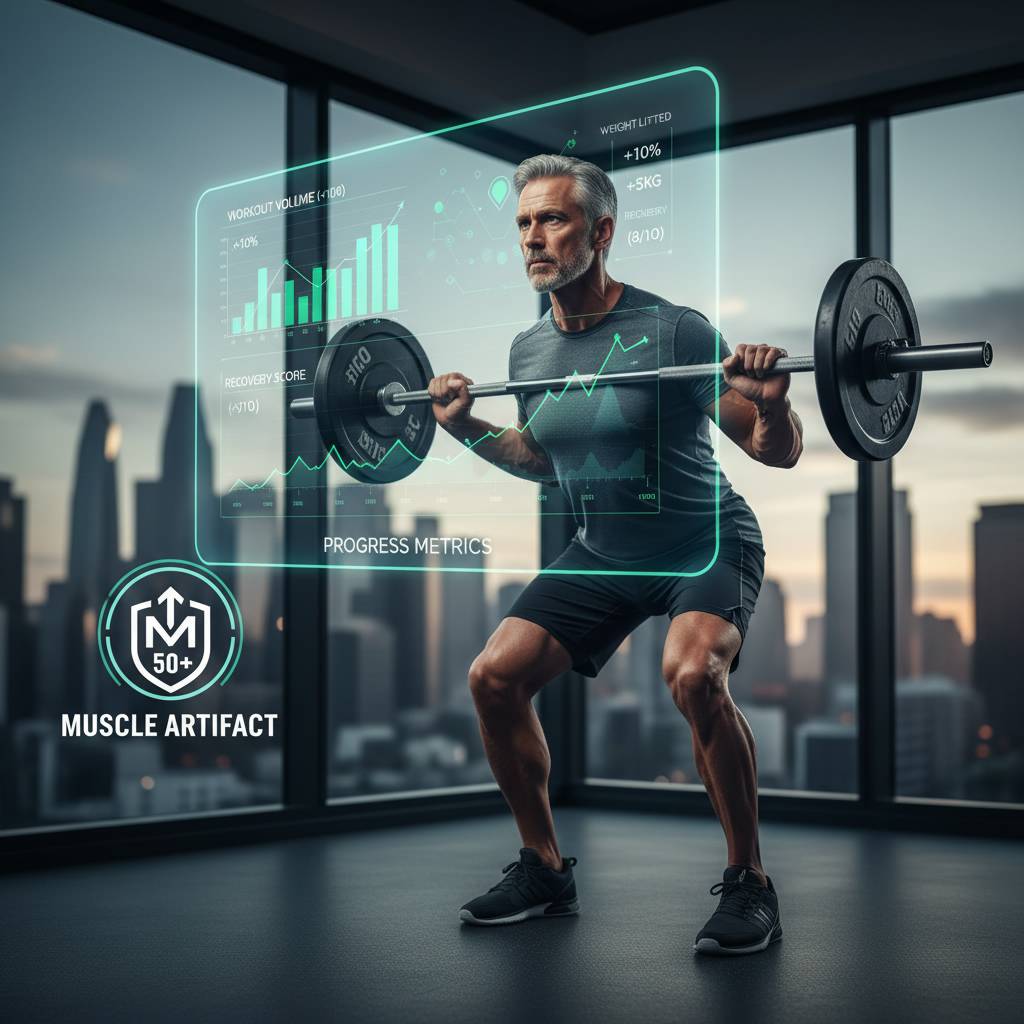 Effective monitoring blends objective measures-weights, reps, and body composition-with subjective ones like energy, sleep quality, and perceived soreness. Keep a simple training log noting loads, repetitions, RPE, and any joint or muscle complaints. Looking at trends over a 46 week block gives a clearer picture than focusing on day-to-day variation.
Certain signals indicate a need to adjust: persistent drops in performance, rising RPE for the same loads, or joint pain that doesn't resolve in a week. When these occur, reduce volume first (fewer sets), keep technique-focused sessions, and reintroduce load conservatively. A temporary switch to alternative movement patterns can preserve conditioning while protecting problem areas.
Flawless technique is not required, but consistent attention to form prevents repetitive stress and maximizes transfer to real-world activities. Older lifters should learn or re-learn foundational patterns-hinge, squat, push, pull, and carry-prioritizing posture, scapular positioning, and hip hinge mechanics. Small technical improvements often allow safe increases in load without escalating joint stress.
Mobility work should be strategic, addressing the specific deficits that limit safe progression. Rather than chasing flexibility for its own sake, focus on joint control within functional ranges. If pain arises, apply conservative measures first: temporary reduction in load, targeted mobility and strengthening of the surrounding musculature, and appropriate anti-inflammatory strategies under medical guidance. Persistent or worsening pain deserves professional evaluation rather than continued training through it.
John, age 64, came to training with the goal of improving daily function and regaining lost strength after a sedentary period. He began with twice-weekly full-body sessions focusing on goblet squats, Romanian deadlifts, incline push-ups, rows, and farmer carries. Initial loads were deliberately low to prioritize form. Over the first month he increased reps from 8 to 12 on most exercises; in week five he added 5% more load once he could complete 12 reps with RPE 7 or below.
Across three months John added roughly 10%15% to his primary lifts while reporting less joint stiffness and improved balance. When his knees flared after an unusually active weekend, the program temporarily shifted to single-leg work and reduced volume. That conservative adjustment prevented an injury and allowed steady progress to continue. This illustrates how measured incremental changes and attentive recovery management produce sustainable gains for older men.
Begin with a baseline session to establish safe technique and identify weak links. From there, choose a simple programming template-two to three sessions per week, each including at least one compound lift, one pulling movement, and one carry or single-leg exercise. Track loads and RPE, and commit to adding no more than small, measurable increments (for example, one extra rep per set every 714 days or the smallest available weight increase when target reps are met).

If you are unsure about exercise selection or need modification for medical conditions, coaching and individualized plans greatly reduce risk and increase efficiency. Mature Male Fitness Coach offers tailored programs and one-on-one guidance designed specifically for older men seeking progressive overload with a recovery-first mindset. Coaching packages typically range from $75-$200 and can be adapted to online or in-person formats.
Ready to move forward? If you prefer direct support, a brief consultation will clarify your starting point and outline a conservative progression plan. Mature Male Fitness Coach can help you set realistic milestones and teach safe technique to accelerate gains without compromising joint health.
Contact us to schedule a consultation:
Call 14707441483 to discuss coaching options, or request a free brief assessment to determine the best starting point for your goals. Early planning and conservative progression make all the difference-progressive overload for older men is both achievable and sustainable when handled thoughtfully.
We look forward to helping you train smarter, not harder. For personalized coaching and ongoing support, contact Mature Male Fitness Coach at 14707441483.
