At Mature Male Fitness Coach, we understand that training goals do not stop at fifty, but physiology does change. This page outlines how to recognize overtraining signs in men over 50 and why early detection prevents setbacks, chronic fatigue, and injury. If you have immediate concerns or need a clinical assessment, contact our team at 14707441483 for an evidence-informed evaluation and individualized plan.
Our approach is persuasive yet clinical: we present objective indicators, practical recovery protocols, and lifestyle adjustments that work with aging physiology rather than against it. The guidance below is intended for men who train regularly-whether for general health, sports, or body composition-and for clinicians or coaches supporting them. Use this as a roadmap to detect overtraining early and to implement corrective steps with confidence.
After fifty, recovery capacity changes due to alterations in hormonal profiles, reduced anabolic response, and cumulative wear on connective tissues and joints. Testosterone, growth hormone, and insulin-like growth factors decline progressively, and chronic low-grade inflammation becomes more common. These shifts make it easier to cross from productive training into a state where training stress outpaces recovery, creating a higher baseline risk for prolonged fatigue and performance decline.
Behavioral factors compound physiological vulnerability. Many men over 50 juggle demanding work schedules, caregiving responsibilities, and sleep disruptions while maintaining high training intensity. A mismatch between training volume or intensity and available recovery resources-sleep, nutrition, stress management, and appropriate periodization-rapidly produces the specific cluster of problems we call overtraining. Recognizing that risk is the first step toward prevention.
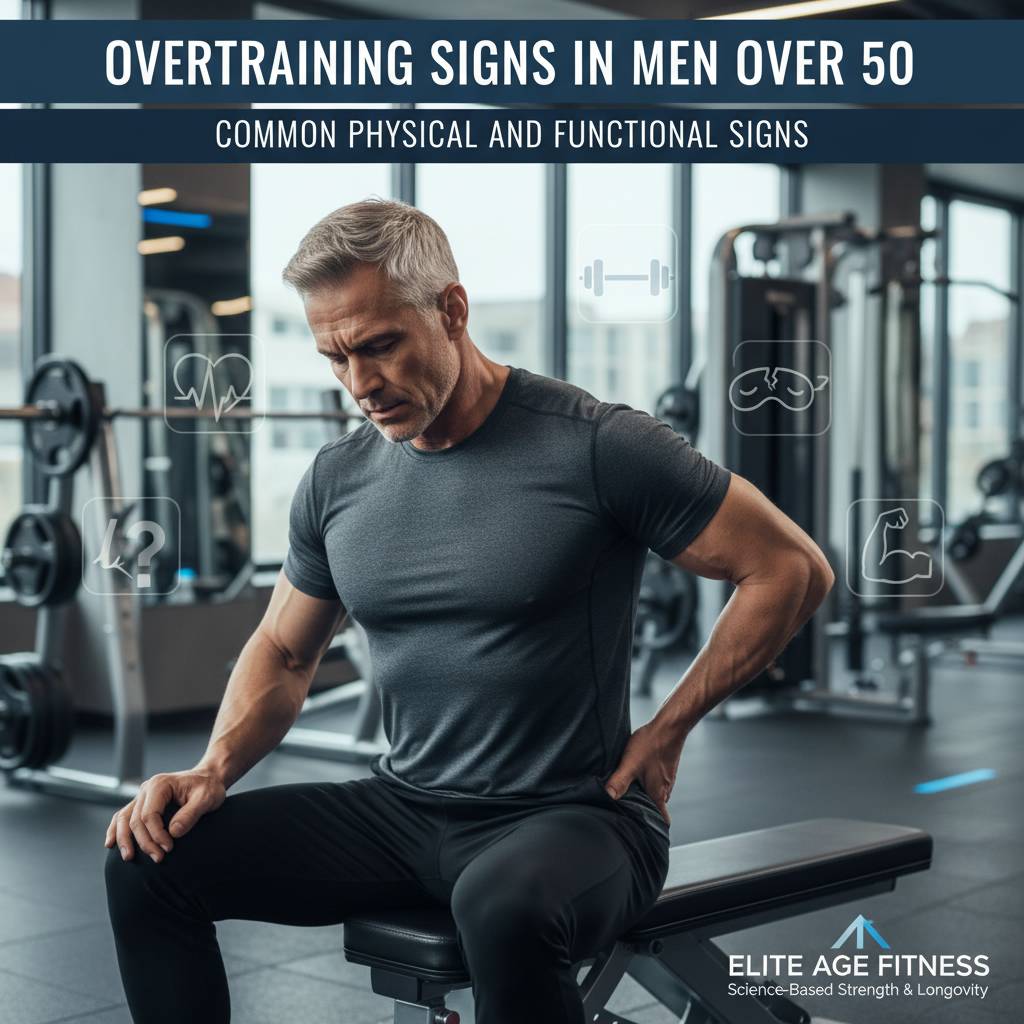 Physical indicators are often the first to appear and are usually obvious when watched for systematically. Persistent muscle soreness beyond expected timelines, recurrent soft-tissue injuries, slowed strength or power gains, and an inability to complete workouts at previous intensities are all hallmark features. Men over 50 may also notice prolonged recovery times between sessions and reduced work capacity during interval or resistance training.
Other physical symptoms include sleep disturbances, increased resting heart rate, or blood pressure variability, and unexplained weight changes. While any one sign can have multiple causes, a cluster of these symptoms appearing after a period of increased training load should raise immediate concern about overtraining. Routine self-monitoring-tracking soreness, performance metrics, and sleep-improves early detection.
Monitor objective performance measures regularly: lifting velocity, 15 rep maximum testing trends, timed aerobic efforts, and other sport-specific metrics. A consistent decline in these numbers despite strict adherence to training often signals maladaptation. Elevated resting heart rate, decreased heart rate variability (HRV) when tracked over weeks, and reduced maximal oxygen uptake during familiar tests can also be practical measures for identifying overtraining.
Psychological changes are frequently under-recognized but critical. Symptoms such as decreased motivation to train, mood disturbances, irritability, anxiety, or depressive feelings can accompany physiological overreach. Cognitive fog, poor concentration, and a sense of burnout-even in athletes who were previously highly motivated-are strong clues that training stress is exceeding coping capacity.
Behavioral shifts may include avoidance of formerly enjoyable exercise, reliance on stimulants to get through workouts, or increased alcohol use to manage sleep or stress. These compensatory behaviors exacerbate recovery deficits. For men over 50, the interaction between psychological stressors and physiological recovery is particularly potent; addressing mood symptoms is an essential component of any recovery plan.
A careful clinical assessment distinguishes overtraining from other medical or endocrine causes of fatigue. Initial evaluation should include a thorough history of training load, sleep, nutrition, psychosocial stressors, and recovery behaviors. A focused physical exam identifies musculoskeletal issues, cardiovascular concerns, or signs of systemic illness. When indicated, laboratory testing looks for anemia, thyroid dysfunction, adrenal insufficiency, infection markers, and relevant hormonal levels.
Objective monitoring tools can strengthen diagnostic clarity: serial performance tests, HRV tracking, resting heart rate logs, and validated fatigue or burnout questionnaires. Collaboration between primary care, sports medicine, and exercise professionals helps ensure that organic causes are ruled out and that a structured, individualized return-to-training plan is safely implemented.
 When overtraining signs in men over 50 are identified, the first step is a deliberate reduction in training stress. This is not simply "more rest" as a vague concept; it is targeted modulation. Initial protocols typically include a 721 day period of significant reduction in volume and intensity, prioritizing sleep hygiene, anti-inflammatory nutrition patterns, and symptom-directed modalities. For many men, even brief cessation of high-intensity work and a focus on active recovery dramatically improves outcomes.
Sleep is the cornerstone of short-term recovery. Aim to increase sleep duration and improve sleep quality through consistent sleep-wake timing, limiting evening stimulants, and creating a sleep-conducive environment. Nutritional adjustments emphasize adequate protein to support muscle repair, sufficient caloric intake to match reduced but still meaningful activity, and anti-inflammatory micronutrients like omega-3 fats, vitamin D, and antioxidants. Hydration and electrolyte balance must also be addressed, especially if training previously included long-duration sweat losses.
In select cases where symptoms are severe or persist despite conservative measures, referral to medical providers for targeted interventions is appropriate. Short courses of pharmacotherapy for sleep disturbances or mood symptoms may be used strategically under medical supervision. Physical therapy or structured rehabilitation addresses persistent musculoskeletal limitations, while graded behavioral therapy supports sleep and stress management. These adjuncts are tools to expedite safe return to training, not substitutes for sensible load management.
Preventing recurrence requires systematic adjustments to training philosophy. Periodization that incorporates planned deload weeks, variation in intensity, and age-appropriate loading patterns reduces cumulative stress. Emphasize quality over quantity: prioritize well-executed strength sessions, mobility work, and metabolic conditioning spread intelligently across the week. For men over 50, including at least two focused resistance sessions per week preserves lean mass and resilience, while aerobic work should be varied to balance intensity and recovery.
Lifestyle factors matter as much as training prescription. Chronic stress reduction strategies-mindfulness, structured leisure, and social connection-support hormonal balance and recovery. Nutritional periodization, with higher caloric or protein intake on intense training days, helps maintain anabolic signaling. Regular medical checkups ensure early detection of comorbidities that can mimic or worsen overtraining, such as thyroid disease, anemia, or sleep apnea.
Consider a 56-year-old recreational athlete who increased weekly high-intensity interval training and heavy lifting without deload weeks. After 10 weeks he reported persistent soreness, reduced strength, sleep fragmentation, and loss of enthusiasm. Objective measures showed a 12% drop in lifting velocity and a sustained 8 bpm elevation in resting heart rate. A structured 3-week deload with improved sleep, nutrition, and gentle mobility work returned his metrics to baseline and reinstated progress once load was reintroduced with proper periodization.
This example illustrates a practical timeline: early recognition, a short but deliberate recovery phase, followed by cautious, measured progression. Returning to prior workload should be gradual-start at 50% of the recent peak volume or intensity and increase by no more than 10% per week while monitoring symptoms. If symptoms recur, revert to reduced load and reassess with clinical support.
Immediate medical evaluation is warranted if fatigue is accompanied by chest pain, syncope, unexplained shortness of breath, significant weight loss, or high fevers-signs that suggest an underlying medical emergency. Otherwise, consult a sports medicine physician, endocrinologist, or experienced exercise physiologist when symptoms persist beyond two to three weeks of conservative recovery or when diagnostic uncertainty remains. Early professional input reduces the risk of prolonged setbacks and chronic fatigue syndromes.
Mature Male Fitness Coach offers comprehensive assessments that integrate clinical testing, performance metrics, and individualized training prescriptions tailored to men over 50. Our team will evaluate training history, run targeted labs if indicated, and design a staged return-to-training program. For expedited assessment or to schedule a consultation, call us at 14707441483 or request an appointment through our clinic contact pathways.
Recognizing overtraining signs in men over 50 requires vigilance for clusters of physical, psychological, and performance changes rather than focusing on any single symptom. When you notice consistent declines in performance, prolonged soreness, mood disturbances, or sleep disruption that align with recent increases in training load, act promptly: reduce load, optimize sleep and nutrition, and monitor objectively. These measures usually restore balance and prevent chronic complications.
Plan long-term by incorporating deload weeks, prioritizing resistance training to maintain muscle mass, and integrating stress management techniques into daily life. If progress stalls or red flags appear, involve medical and exercise professionals to create a safe, individualized path forward. With timely adjustments, men over 50 can continue to train effectively and sustainably without sacrificing health or future performance.
Ready to get evaluated? If you suspect overtraining or want a tailored recovery plan, contact Mature Male Fitness Coach today at 14707441483. Our clinical team specializes in age-appropriate assessment and evidence-based protocols for sustainable return to training.
We encourage early action-small, timely adjustments prevent major setbacks. Reach out to Mature Male Fitness Coach at 14707441483 for assessment and individualized support from our experienced clinicians and trainers.
