As you move past age 50, maintaining and building lean muscle changes from a cosmetic goal into a practical investment in independence, metabolic health, and injury resilience. Hormonal shifts, slower recovery, and decades of accumulated movement patterns mean that a program for younger men will rarely translate directly. Understanding realistic timelines and physiological limits helps you choose a program that supports long-term function rather than quick, unsustainable gains.
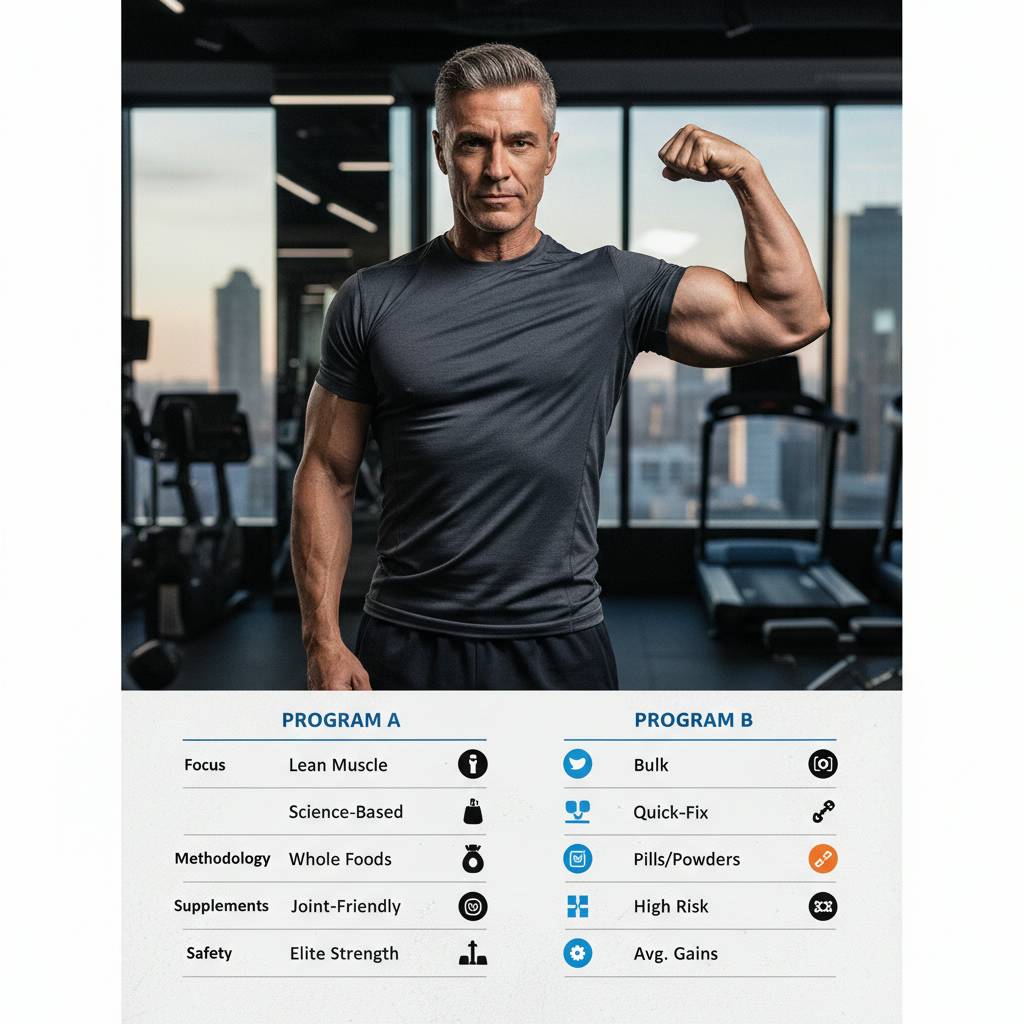
When comparing lean muscle programs for men over 50, look for evidence that the curriculum is adapted to age-related changes: progressive overload paced to recovery, emphasis on anti-fragility through mobility and joint health, and nutrition strategies that address protein needs and insulin sensitivity. Programs that promise extreme short-term muscle increases without addressing these factors often produce heat but not sustainable transformation. The right plan balances challenge with smart recovery and lifestyle integration.
Beyond muscle mass, a successful program should improve balance, reduce chronic pain, and increase daily energy. This broader focus distinguishes high-value programs from commodity options. Expect a well-structured program to measure more than bodyweight and mirror progress through strength benchmarks, movement quality assessments, and simple markers of recovery like sleep, mood, and joint comfort.
 Curriculum: a strong curriculum is evidence-based, modular, and explicit about why exercises are chosen. It should include compound strength work adapted for common age concerns (hips, shoulders, lower back), targeted mobility routines, and a sensible metabolic component to preserve muscle while managing body fat. Look for graduated phases-foundation, strength, and maintenance-so you can see how the program scales across months.
Progression: effective progression is individualizable and measurable. Programs that use fixed weekly increases without autoregulation risk injury when recovery varies. Prefer systems that include objective benchmarks (rep ranges, percentage of one-rep max, rate-of-perceived-exertion adjustments), and offer alternative progressions for those managing joint pain or limited time. Progression should be transparent so you know how long it will take to reach each milestone.
Support: support level separates entry-level plans from high-value offerings. Consider whether you need on-demand library content, weekly coach check-ins, personalized training plans, or hands-on in-person sessions. High-touch options typically cost more but deliver faster, more reliable outcomes because they correct technique, adjust volumes based on feedback, and provide accountability. Decide what balance of guidance and independence suits your personality and budget.
Online, self-guided programs are often the most affordable, ranging roughly $75-$200 for structured courses and templates. They can be excellent if you already have coaching experience and strong self-discipline. These programs provide flexibility and comprehensive libraries, but they usually lack personalized adjustments that matter for men over 50 who have past injuries or mobility limitations. When evaluating online options, prioritize those offering clear progression systems and modification guidance.
Hybrid coaching combines self-paced modules with scheduled coach check-ins and typically costs $200-$600 per month depending on access to video review and frequency of live calls. This model offers better personalization and accountability while keeping costs below full in-person coaching. For many men over 50, hybrid models are the best value: they provide technique correction, program tweaks for recovery, and dietary coaching without the travel and scheduling overhead of daily sessions.
In-person training remains necessary for those who need hands-on correction, medical supervision, or a full-service environment. Prices vary but often fall into $50-$150 per session or $300-$1,200 per month depending on frequency and trainer expertise. In-person approaches are high-touch and can accelerate results, though they demand scheduling and higher ongoing costs. Weighting the trade-offs-cost, convenience, and the extent of personalization-will help you choose the right format for your life.
Some programs blend physical therapy and strength training to manage specific conditions such as osteoarthritis or post-surgical rehabilitation. Although these options can cost more up front, they often prevent setbacks and enable safer long-term training. If you have diagnosed degenerative disease or recent major surgeries, prioritize programs that involve licensed clinicians and measurable criteria for returning to higher-intensity lifting.
Time commitment is a practical limiter for many men over 50. Programs that require 4 gym days per week may produce faster strength gains but will be hard to sustain long-term for those balancing work and family. Look for programs that deliver meaningful results with 2-3 targeted sessions per week plus short daily mobility and walking. This approach respects recovery and increases adherence, which is often the strongest predictor of lasting success.
Cost ranges fall along a value curve. Entry-level monthly subscriptions and apps may cost $10-$75 per month; more personalized hybrid or coaching options commonly run $200-$600 per month; dedicated in-person or medical-integrated programs fall into higher ranges. Consider total cost over a 6-12 month window rather than month-to-month spikes-what feels expensive at first may be more cost-effective if it prevents recurring injuries or poor programming that delays progress.
Expected timelines should be realistic: novice trainees often see significant functional improvements within 8-12 weeks, with measurable lean muscle gains and strength increases by month 3-6. However, programs promising major transformations in 6 weeks without strong recovery-oriented planning are often marketing-driven. Choose options that map clear milestones over 3, 6, and 12 months so you can evaluate progress objectively.
| Program Type | Typical Cost | Time Commitment | Personalization | Best For |
|---|---|---|---|---|
| Self-guided online course | $75-$200 (one-time or annual) | 2-4 hrs/week | Low (templates video library) | Disciplined buyers with few mobility issues |
| Hybrid coaching (online coach) | $200-$600/month | 2-3 structured sessions daily mobility | Moderate (weekly check-ins, video review) | Busy professionals needing accountability |
| In-person personal training | $300-$1,200/month | 2-5 sessions/week | High (hands-on correction) | Those needing close supervision or rehab |
| Therapeutic strength programs | $75-$300/month | 2-4 hrs/week home exercises | Very high (clinician-led) | Post-surgical or chronic pain cases |
Start by defining your primary objective and the timeline that feels realistic: are you preparing for a specific event, aiming for steady year-round improvements, or prioritizing injury prevention? If your timeline is short (8-12 weeks) and you already have training experience, a higher-touch hybrid or a focused in-person cycle can accelerate results. For longer timelines with sustainable adaptation, a well-designed online program or hybrid plan offers the best balance of cost and effectiveness.
Budget decisions are also a matter of expected return. If an inexpensive plan doesn't provide personalized progressions or technique feedback, you may save money upfront but lose time and potentially incur injury-related costs later. Conversely, high-priced coaching that includes nutritional planning, mobility training, and technique analysis often results in faster, safer gains. Evaluate programs as investments that can deliver improved healthspan and reduced medical or mobility expenses over time.
If you are undecided between formats, a hybrid approach often produces the best results for men over 50: start with a short-term, higher-touch coaching block (6-12 weeks) to establish movement quality and load tolerance, then transition to a lower-cost, structured maintenance program with periodic check-ins. This staged strategy minimizes cost while preserving technical foundations and accountability.
Every program has trade-offs between personalization, cost, and convenience. Lower-cost programs demand more of your judgment; higher-cost options take on more responsibility but require a larger financial commitment. A pragmatic compromise is to choose programs that offer modular upgrades: an online curriculum with optional monthly coach reviews or a local trainer who can biomechanically screen you before you commit to a longer in-person plan. This lets you validate fit without full upfront expense.
Another frequent trade-off is intensity versus longevity. Programs that push intensity early can deliver rapid change but often at the expense of joint health and long-term adherence. For men over 50, prioritize programs that emphasize sustainable intensity-steady progression with built-in deloads, mobility protocols, and nutrition strategies to support recovery. Those elements reduce setbacks and deliver cumulative gains across years rather than fleeting bursts.
Finally, consider accountability mechanisms that work for you: community forums, coach check-ins, or scheduled gym times. High-value programs understand that adherence is the single most important predictor of success, and they build accountability directly into the pricing model. You may pay more for this structure, but the improved outcomes typically justify the expense.
 When you are ready to choose, create a short shortlist of programs that meet your criteria for curriculum, progression, and support. Ask for sample week plans, coach qualifications, and client case studies specific to men over 50. Request a movement-screen or baseline assessment if available-this will quickly reveal whether the program can accommodate your mobility limitations and recovery needs. A well-run provider will welcome these questions and provide clear, evidence-based answers.
Mature Male Fitness Coach is available to help you compare programs and design a phased approach that matches your timeline and budget. Our consultants can review sample curricula, explain how progression is managed, and outline a cost-effective strategy that blends short-term coaching with long-term maintenance. Contact us to schedule a complimentary evaluation and receive a tailored recommendation.
Q: How long before I see meaningful muscle gains? A: Most men notice better strength and functional improvements within 8-12 weeks, with measurable lean mass changes by months 3-6 when nutrition and recovery are aligned with training. Programs that integrate progressive resistance, sufficient protein intake, and sleep optimization produce the best results.
Q: What is the minimum effective dose of training? A: For most men over 50, 2-3 full-body strength sessions per week plus focused mobility and low-intensity aerobic work delivers substantial returns. More volume can speed adaptations but also increases recovery needs; choose programming that scales intensity based on recovery markers.
Case example: A 54-year-old client with a prior shoulder injury chose a 12-week hybrid program with video technique review and personalized progressions. Within 10 weeks he reported less pain, improved squat depth, and a 12% increase in deadlift strength while losing body fat. The initial coach investment avoided aggravating his prior injury and delivered faster, sustainable progress.
Ready to compare lean muscle programs for men over 50? If you'd like a concise, personalized comparison of high-value options tailored to your timeline and budget, reach out. Our team can highlight programs that fit your goals and explain the trade-offs clearly so you can make a confident decision.
Contact Mature Male Fitness Coach today to schedule your evaluation. Call us at 14707441483 to speak with a consultant and get a clear plan for building lean muscle safely and sustainably.
