Finding the best training for men over 50 requires a clear prioritization of safety, mobility, and progressive strength work. At Mature Male Fitness Coach, we help mature men move past one-size-fits-all programs and adopt evidence-based routines that respect changing physiology, time constraints, and life goals. Men in this stage benefit most from programs that emphasize joint-friendly strength gains, preserved cardiovascular health, and deliberate recovery strategies that reduce injury risk while improving performance and quality of life.
In practical terms, that means building a foundation that reduces pain, increases functional capacity, and maintains independence. A smart plan balances resistance training, low-impact aerobic conditioning, mobility and balance work, and attention to sleep and nutrition. This guide lays out how to choose or design the best training for men over 50, explains how to progress safely, and gives real-world examples you can adapt to your schedule and preferences.
Physiological changes after age 50 are normal: muscle mass tends to decline without regular stimulus, recovery windows become longer, and joint resilience can decrease. These shifts don't mean training must be timid-far from it-but they do mean programs should be smarter. Priorities move from maximal volume and novelty toward durability, targeted strength that supports daily tasks, and mobility that preserves athleticism and reduces chronic pain.
Another important shift is risk versus reward. Older men often have competing responsibilities-career, family, medical considerations-so the time spent training must deliver measurable benefits. The best training for men over 50 therefore focuses on compound movements that yield high functional return, short but effective metabolic sessions, and consistent mobility work. When training is efficient and effective, adherence rises and long-term outcomes improve.
 Any high-quality program for this demographic includes four core components: strength training, cardiovascular conditioning, mobility and balance work, and recovery planning. Strength training is the backbone because it preserves lean mass, supports bone density, and improves metabolic health. Cardiovascular work maintains heart health and endurance without stressing joints when selected appropriately. Mobility and balance reduce fall risk and keep daily activities comfortable; recovery ensures the gains are sustained.
Within each component, specific choices matter. Strength training should prioritize multi-joint, functional movements performed with controlled technique and progressive overload. Cardiovascular conditioning should favor low-impact modalities like brisk walking, cycling, or swimming when joint issues exist, with 12 higher-intensity intervals per week if cleared by a medical professional. Mobility should be daily and purposeful, addressing tight hips, thoracic spine, and shoulders.
A common and effective split for many men over 50 is three strength sessions plus two conditioning or mobility-focused days each week, with two rest or active recovery days. Sessions should start with a specific warm-up that includes joint mobility and activation patterns for the muscles you will use. Strength workouts can be 3050 minutes; conditioning sessions 2040 minutes. This format balances stimulus and recovery and is adaptable to travel or busy weeks.
Strength programming for men over 50 should emphasize compound exercises such as squats, deadlifts, hip hinges, pressing, and rows, modified as necessary for individual joint health. Begin with conservative intensities and focus on consistent progression-either by adding small amounts of weight, increasing repetitions, or improving movement quality. Micro-progressions (for example, adding 1-2 pounds or one rep per week) produce substantial results over months and reduce injury risk compared to aggressive jumps in load.
Mobility and corrective work deserve daily attention. Short sessions of 1015 minutes that combine soft-tissue work, dynamic mobility drills, and thoracic rotation can significantly improve shoulder and hip function. Balance exercises-single-leg stands, tandem walking, and reactive steps-should be included two to three times weekly. These elements prevent falls, ease chronic aches, and allow stronger training sessions to continue uninterrupted.
Progression strategies should be individualized. Use the RPE (rate of perceived exertion) scale or a repetition-in-reserve approach to auto-regulate intensity based on daily readiness. Recovery metrics like sleep quality, resting heart rate variability, and subjective energy should inform loading decisions. If soreness or poor sleep is present, reduce volume or intensity rather than pushing through-consistency over months wins over sporadic maximal effort.
Cardiovascular fitness supports longevity, metabolic health, and energy. For many men over 50, the best training for cardiovascular conditioning mixes steady-state low-impact work with careful intervals. For example, 30 minutes of brisk walking or cycling on four days a week combined with one session that includes 68 short intervals at a harder pace provides improvements without excessive joint stress. Gradual increases in duration and intensity are safer and more sustainable than abrupt spikes.
Metabolic conditioning sessions-short circuits that combine strength and cardio-can be powerful when kept brief and scaled. Choose circuits that emphasize bodyweight and light resistance with controlled tempo. A 20-minute circuit of kettlebell swings, step-ups, and rowing can improve conditioning and strength simultaneously while remaining joint-friendly when programmed correctly. Always prioritize form over speed to avoid compensatory patterns that create injury risk.
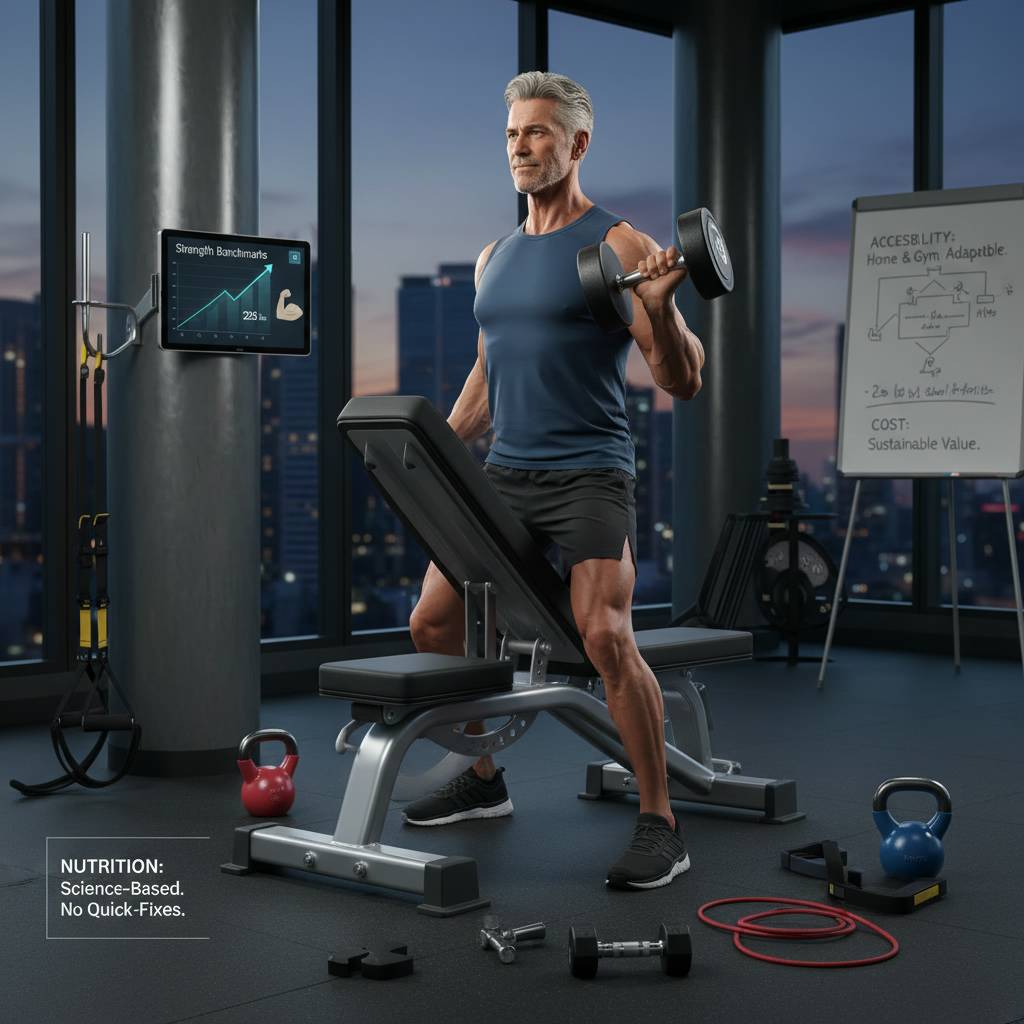 Training should fit your life. Equipment needs can be minimal: a pair of adjustable dumbbells, resistance bands, a kettlebell, and a bench or sturdy chair are enough to build an effective program. Some men prefer gym access for heavier loads and machines; others need home-based solutions for convenience. Both paths can deliver results when exercises are chosen and progressed intelligently.
Cost is often a concern. Personal training or small-group coaching typically ranges from $75-$200 per session depending on location and credentials, but many men find that a short consultation to learn a program-followed by remote support or periodic check-ins-offers a good balance of guidance and affordability. Mature Male Fitness Coach offers consultations and program design to match different budgets and goals; call us at 14707441483 to learn options that fit your schedule and preferences.
Below is a sample plan that exemplifies the principles described. It's scalable and designed to emphasize safety, mobility, and progressive overload. Always obtain medical clearance if you have known cardiovascular or musculoskeletal conditions before starting a new program.
Adjust sets, reps, and frequency based on individual recovery and schedule. If joint pain flares, swap higher-impact moves for alternatives (e.g., split squats instead of barbell back squats) and consult a specialist if pain persists beyond a week of modification.
Training adaptations rely on sufficient nutrition and sleep. Prioritize dietary protein-aim for at least 0.6-0.8 grams per pound of body weight per day-to support muscle retention and repair. Balanced meals that include whole grains, fruits and vegetables, healthy fats, and adequate hydration complement training and reduce inflammation. Timing protein intake around workouts can optimize recovery, but overall daily intake matters most.
Recovery strategies include consistent sleep (7-9 hours per night if possible), stress management, and periodic deload weeks where training volume or intensity is intentionally reduced. Simple supplements can support recovery when used appropriately: vitamin D if deficient, omega-3s for inflammation management, and creatine monohydrate to support strength and cognitive health. Always check supplements with a healthcare provider if you take medications or have chronic conditions.
Many men over 50 worry about arthritis, prior injuries, or lack of time. Practical modifications make training accessible and effective. For osteoarthritis, reduce impact, use partial range of motion initially, and emphasize strengthening muscles around affected joints. For prior shoulder or knee injuries, prioritize scapular and hip control exercises before loading. When time is limited, high-quality 2535 minute sessions focused on compound movements provide meaningful stimulus when done consistently.
Another common concern is motivation. Short-term challenges, training partners, or a coach can boost adherence. Setting measurable, realistic goals such as increase deadlift by 20 pounds in 12 weeks or improve single-leg balance hold to 45 seconds provides accountability and tangible progress. MMFC can be a helpful shorthand in conversation with our team if you've worked with us before-just mention it when you call.
Yes, when programmed correctly and progressed sensibly. Heavy should be relative to experience and recovery capacity. Guided progression, proper technique coaching, and adequate recovery make heavier loads a viable and beneficial stimulus for bone density and strength. Consult a professional if you have cardiovascular risk factors or complex joint history.
Three strength sessions plus two conditioning or mobility days is a practical and effective model for many men over 50. Some may thrive on four days of training or prefer two full-body sessions with more conditioning. The key is consistency and recovery, not a specific number of sessions.
Seek professional guidance if you have persistent pain that limits daily activities, significant medical conditions, or if you're unsure how to progress safely. A qualified coach or physical therapist can individualize exercises, correct movement patterns, and create a plan that fits your goals and constraints.
Tom, 56, came to Mature Male Fitness Coach after chronic low back stiffness and losing confidence with heavier lifts. We implemented a 12-week plan focused on hip hinge mechanics, progressive deadlifts starting with kettlebell variations, and a daily 10-minute mobility routine. Over 12 weeks Tom regained 15 pounds on his deadlift variation, reported less morning stiffness, and returned to weekend trail walks without pain. This is the kind of practical, measurable progress consistent programs deliver.
Stories like Tom's underline a key point: the best training for men over 50 is individualized, realistic, and measurable. Small, consistent improvements compound into meaningful changes in function and confidence over months and years.
 If you're ready to choose the best training for men over 50 with a program built around safety, mobility, and progressive strength, we can help. Mature Male Fitness Coach offers personalized assessments, program design, and in-person or remote coaching options tailored to your schedule and goals. Our specialists will evaluate medical history, movement quality, and lifestyle to deliver realistic, effective plans.
To schedule a consultation or ask a question, contact Mature Male Fitness Coach at 14707441483. Our team is available to discuss program options, pricing, and the best way to begin. Make a small commitment today and build durable fitness that serves you for decades.
Call to action: Book a no-obligation consultation to get a customized starting plan and 4-week progression template. Or request a sample session to see how we assess movement and prescribe safe strength increases.
We look forward to helping you find the best training for men over 50 and supporting your next-level health. Contact Mature Male Fitness Coach at 14707441483 to get started.
